An AI of Our Own

Existing Models Exclude Global South Cultures

[ THE WORLD TODAY ]

AI tools and LLMs such as ChatGPT are growing exponentially, but they have a fundamental flaw: they rarely accurately represent global south cultures. The digital divide becomes greater and greater, and cultures that have traditionally relied on oral transmission struggle to find their place in the digital future.

Digital
Divide

Digital heritage projects around global south communities that are created by and for the communities themselves are lacking. If digital scans exist, they are often the property of global north companies or museums.

Reliance
on Written
Knowledge

Most digital archives and AI models rely heavily on western centric ways of knowing which often exclude direct community agency in data collection, fine tuning and validation.

Where We Come From

An AI of Our Own is an initiative of Living Arts International (LAI), a 501(c)3 registered non-profit with the goal of creating a peaceful, sustainable future with the living arts as a catalyst for change.

AAOO launched in 2024 after 2 years of research and concept development. The goal is to leverage the potential and exponential growth in AI technology to create adaptive and responsive systems to preserve cultural heritage in a way that centers and celebrates diverse ways of knowing and sharing knowledge.

Strategic Objectives

Global South Connection

Build connections and collaborations across the global south, understanding and respecting both our shared experiences as well as our diversity.

Just
Representation

Address the bias and lack of representation in current systems that portray cliched, incorrect, or generalized pictures of many global south communities.

Technology Innovation

Push the boundaries and address limitations in existing AI models, pioneering and delivering technology that centers communities and embraces diverse ways of knowledge creation and sharing in culture through practical applications and test cases.

Mission

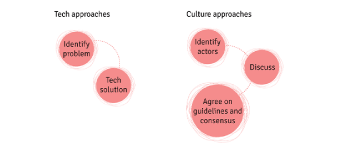
We aim to center the global south in the future of AI, particularly in connection with cultural heritage, through advocacy, practical model development, and interdisciplinary research and initiatives. We build a bridge between the traditionally disparate perspectives of the tech and culture spheres. Our manifesto is at the heart of our work, serving as a practical guide, a tool of collaboration, and a policy document - as well as a place to track and process our learnings.

Vision

A future where ethical, respectful, and community-centered AI is the norm, where the global south is fairly represented across all major and minor models, and communities are empowered to create digital futures that are responsive to the ever-evolving nature of culture and technology.

May 2025

Development of the initial concept note

Jun – Sep 2024

Landscaping
Research

Nov 2024 – Jan 2025

Development of the Manifesto

Mar 2025

Feedback sessions

April 2025

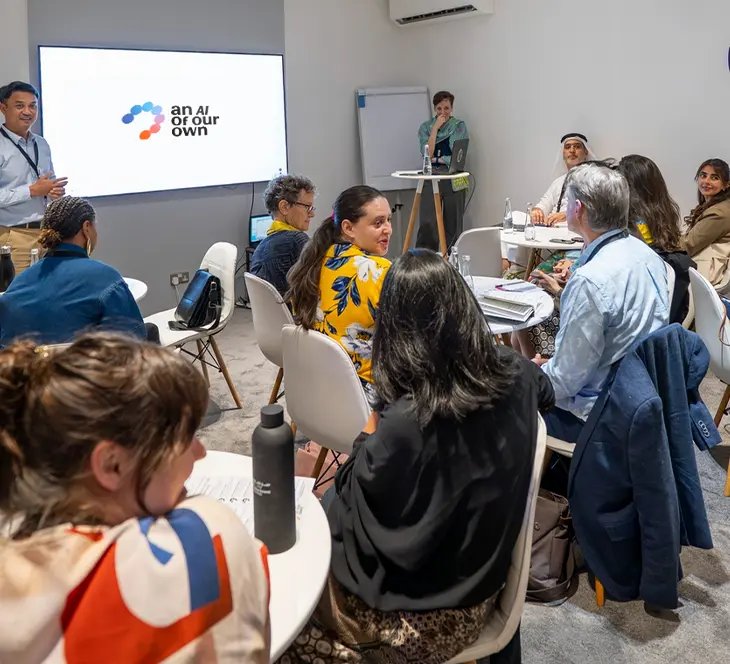
Manifesto Launched at Abu Dhabi Culture Summit

May 2025 – Present

Pilot Case and Consortium Building

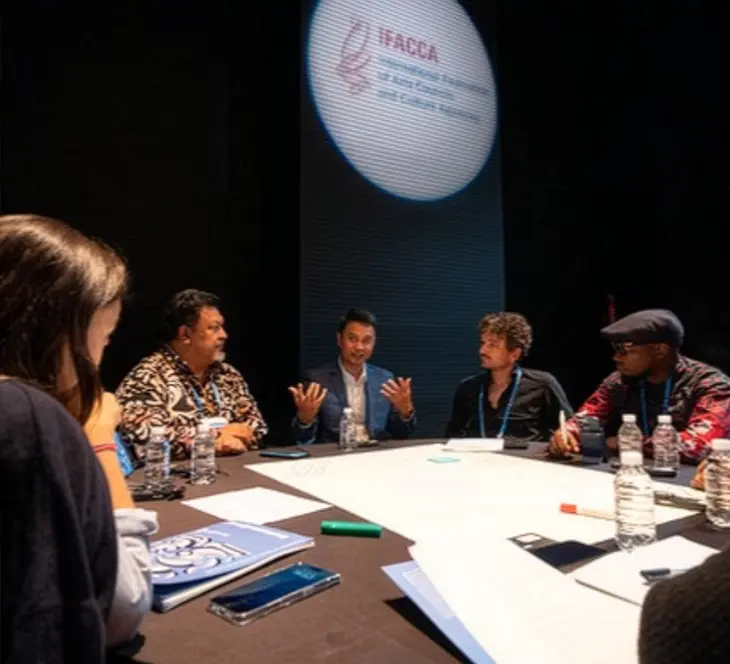
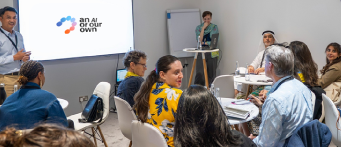
Based on information from a Delphi survey and multiple conceptual workshops, we held a collaborative workshop to refine an initial concept note.

The initial workshop identified the need to understand the existing landscape of digital heritage efforts in Africa and Asia as well as initiatives around inclusive AI globally. The final report outlined the need to define the methodology and approach of the AI part of AAOO.

The finding of the research led to the curation of a working group with people from diverse backgrounds to create the manifesto. They met over the course of 5 online sessions, from facilitated conversation to collective brainstorming.

We opened the draft Manifesto to the working group and Advisors for feedback.

In addition to a dedicated workshop on the Manifesto, we also presented a panel “Transmission by Avatar: From Oral to Digital Knowledge,” on the evolution of knowledge transmission and the role of AI in the future.

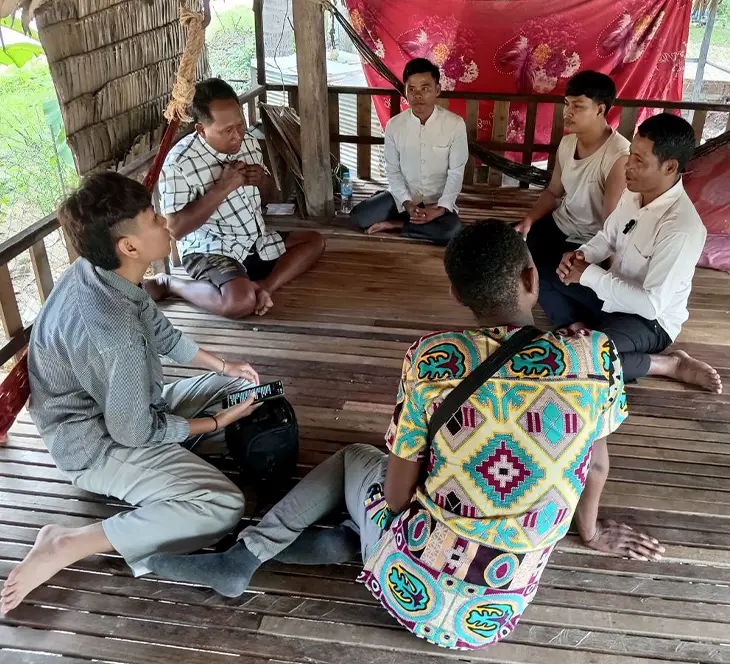
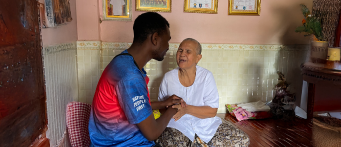
We are currently working on two pilot cases in Cambodia and South Africa as well as working to formalize the Consortium through monthly meetings.